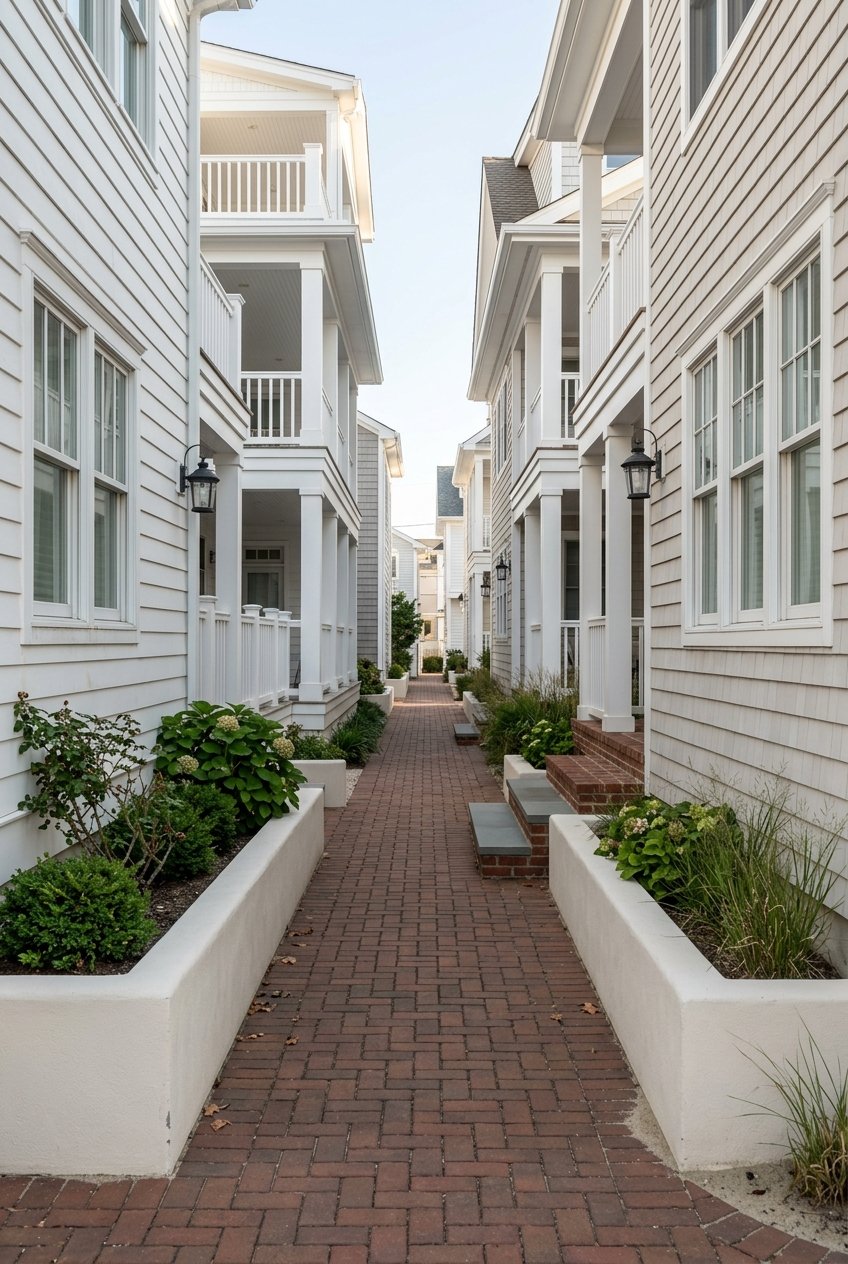
Want a beach town where you can leave the car parked and still get to the sand, dinner, coffee, and evening entertainment on foot? Rehoboth Beach stands out for exactly that reason. If you are thinking about buying, visiting neighborhoods, or simply trying to understand how different parts of town feel block by block, knowing the most walkable lanes and loops can help you picture daily life more clearly. Let’s dive in.
Why walkability matters in Rehoboth Beach
Rehoboth Beach is compact, built out, and only about one square mile. That small footprint shapes how the city works, especially in the downtown core where walking, storefront activity, and the public realm are central to the city’s planning priorities.
The city identifies Rehoboth Avenue as the main commercial corridor connecting midtown to the oceanfront. Along with the Boardwalk, Baltimore Avenue, Wilmington Avenue, and the Christian Street gateway area, this stretch forms the heart of the on-foot experience.
In practical terms, that means you can cover a lot of ground in a short walk. It also means the experience changes by season, since parking is managed from May 15 to September 15 and some downtown sidewalks do not allow bikes.
Downtown core feels most walk-to-everything
If your goal is true convenience, the strongest walkable zone is the downtown commercial district. According to the city, shops, boutiques, and restaurants are most concentrated along all of Rehoboth Avenue, on the Boardwalk, and within the first two blocks inland from Baltimore Avenue to Wilmington Avenue.
This same compact area also includes civic and visitor stops like the Bandstand, Visitors Center, City Hall, public restrooms, the Historical Museum, and the Public Library. For buyers, that concentration matters because it creates a daily rhythm that feels easy and connected.
The downtown footprint is also deeper than many people expect. The Main Street guide lists more than 100 restaurants and casual eateries, along with more than 40 hotels, B and Bs, and condo stays downtown, which supports the idea that this is not just a beach strip but a layered, active district.
Boardwalk and Rehoboth Avenue loop
Best for all-day activity
If you want the liveliest walking loop in town, start here. The Boardwalk and Rehoboth Avenue compress the beach, dining, shopping, amusements, and civic anchors into just a few blocks.
This area is ideal for people who want a car-light routine with quick access to everyday coastal fun. You can move from the beach to a meal, then to shopping or an evening event, without needing to plan much beyond where to park once.
What the housing mix looks like
The built form here tends to lean toward small-scale mixed-use buildings, hotels, inns, condos, and older beach-town structures. Compared with quieter residential sections, this pocket feels more active and convenience-driven.
For a second-home buyer, that often translates to less dependence on the car and more emphasis on proximity. If you want to maximize walkability above all else, this is the benchmark area.
North Rehoboth and Lake Gerar loop
Best for a quieter stroll near downtown
North Rehoboth offers a different kind of walkability. The city describes it as a grid-pattern neighborhood bounded by Lake Gerar, Lake Avenue, Surfside Place, the Boardwalk, and the rear property line of Maryland Avenue parcels.
The feel here is more residential, but it still keeps you close to the shoreline and the downtown core. That balance can be appealing if you want an easier walk to activity without being in the center of it all day.
Why Lake Gerar changes the feel
Lake Gerar Park adds a park-centered layer to this pocket, with a freshwater lake, fishing pier, playground, gardens, picnic tables, and walking paths. That gives the neighborhood a softer, calmer walking experience than the main downtown corridor.
The east end near the Boardwalk includes several large hotels, while many other properties remain residential in character and some have shifted to commercial uses. The result is a neighborhood with a little more variation and a little more breathing room.
Original City loop
Best for classic beach-town character
The Original City is one of the clearest examples of a historic, walkable residential grid near the ocean. The city describes it as bounded by the Boardwalk, Philadelphia Street, 2nd Street and Bayard Avenue, and Olive and Virginia Avenues.
This is the kind of area where the walk itself becomes part of the appeal. The pattern is straightforward, the blocks are easy to navigate, and the setting feels tied to Rehoboth Beach’s older coastal form.
What stands out here
The housing mix includes small camp houses, rambling boarding homes, and some condos. Many homes are two-story, wood-sided, and porch-forward, which gives the neighborhood a familiar and established beach-town look.
For buyers, this pocket can appeal if you want a residential setting that still keeps the beach and downtown within easy reach. It feels car-light without feeling purely commercial.
South Rehoboth loop
Best for walkability with a residential feel
South Rehoboth sits between the Boardwalk and Silver Lake, with Scarborough Avenue to the west and Christian Street and Philadelphia Street to the north. The city describes it as having a beach-vacation-home appearance, which fits the neighborhood’s rhythm well.
This area often appeals to people who want a short walk to the sand but prefer streets that feel more residential than the downtown center. You still get convenience, but with a calmer backdrop.
Streets and homes support easy walking
South Rehoboth follows a straight grid with curbs and sidewalks. That simple layout supports easy walking and helps you move comfortably between home, the beach, and nearby downtown destinations.
The housing stock is mostly older with newer infill mixed in, and cottage style is common, often with wood facades and screened front porches. For many buyers, that combination creates a relaxed coastal setting with strong everyday usability.
The Pines and Grove area loop
Best for a leafy, meandering walk
The Pines has a more tree-dominant feel and is a little less urban than the core. Even so, it remains close to Lake Gerar and Central Park, which helps preserve a walkable lifestyle in a more shaded setting.
Homes here are generally larger, mostly two-story, wood, and muted in color, with many front porches and front entries. The atmosphere feels quieter and more tucked away than the main downtown grid.
Grove-Camp Meeting area adds variety
Nearby, the Grove-Camp Meeting Area is one of the most varied residential districts in town. You will find a mix ranging from one-story homes to tiny cottages, which gives the area a more eclectic and historic feel.
The street pattern is less formal, with some diagonal connections and fewer sidewalks. Because of that, walking here feels more meandering than grid-like, which may appeal if you enjoy a slower, more organic neighborhood layout.
Which areas are truly walk-to-everything?
If you want to walk to restaurants, shops, entertainment, civic destinations, and the beach with the fewest tradeoffs, focus first on the downtown core. That means the Boardwalk, Rehoboth Avenue, and the first two inland blocks around Baltimore Avenue and Wilmington Avenue.
If your priority is walk-to-the-beach with a more residential backdrop, North Rehoboth, the Original City, and South Rehoboth each offer strong options. The experience becomes a little less commercial and a little more neighborhood-oriented as you move away from the center.
The Pines and the Grove-Camp Meeting Area still support a walkable lifestyle, but they lean more toward scenic neighborhood strolling than all-day, walk-to-everything convenience. For some buyers, that is a better fit.
How seasonality affects the walking experience
Summer is when Rehoboth Beach feels most active on foot. The city notes strong seasonal pedestrian activity downtown, and the combination of managed parking and heavy foot traffic can make close-in locations even more practical for people who want to minimize driving.
Shoulder season often brings a calmer version of the same streets and loops. You still get the benefit of the compact layout, but with a quieter pace that lets neighborhood character stand out more clearly.
That seasonality matters when comparing properties. The closer you are to the Boardwalk and Rehoboth Avenue, the easier it is to maintain a convenience-first coastal routine during the busiest months.
What walkability says about housing choices
Across Rehoboth Beach’s most walkable pockets, the housing mix tends to be compact and low-rise. You will see cottages, camp houses, boarding homes, low-rise condos, converted residences, and smaller inns or B and Bs near the Boardwalk, with larger detached homes and tree-shaded lots a few blocks farther back.
That pattern helps explain why different parts of town support different lifestyles. Close-in properties often favor convenience and a car-light routine, while slightly removed blocks can offer a more private residential setting without losing access to the beach and downtown.
For buyers comparing neighborhoods, the key question is not just whether you can walk. It is what you want to walk to most often and how lively or quiet you want those walks to feel.
Finding your best Rehoboth Beach fit
The most walkable parts of Rehoboth Beach are not all the same. Some are energetic and central, some are historic and porch-filled, and some offer a softer, park-adjacent or tree-lined experience a few blocks from the action.
That is what makes the city so appealing. Within a very compact footprint, you can choose a lane or loop that matches the kind of coastal routine you want, whether that means stepping straight onto the Boardwalk or enjoying a quieter stroll home after dinner.
If you are weighing where to buy in Rehoboth Beach, neighborhood context matters just as much as the property itself. For personalized guidance on walkable pockets, coastal homes, condos, or new opportunities in town, connect with Justin Healy.
FAQs
Which part of Rehoboth Beach is most walk-to-everything?
- The downtown core is the strongest walk-to-everything area, especially along Rehoboth Avenue, the Boardwalk, and the first two blocks inland from Baltimore Avenue to Wilmington Avenue.
Which Rehoboth Beach area feels most residential but still walkable?
- South Rehoboth, North Rehoboth, and the Original City each offer a more residential feel while still keeping you within walking distance of the beach and downtown destinations.
Which Rehoboth Beach neighborhood feels most historic?
- The Original City and the Grove-Camp Meeting Area stand out for their historic beach-town character, with older homes, cottages, and a more established neighborhood pattern.
How does summer change walkability in Rehoboth Beach?
- Summer brings stronger pedestrian activity downtown, and seasonal parking management from May 15 to September 15 makes close-in locations especially convenient for a car-light routine.
What kind of homes are common in Rehoboth Beach’s walkable areas?
- Common property types include cottages, camp houses, boarding homes, low-rise condos, converted residences, smaller inns, and larger detached homes a few blocks farther from the core.